Moonshine Still Kit: Buyer's Checklist
This buyer's checklist for a moonshine still kit starts with federal law, not a shopping cart, and explains why home spirits production is not a kitchen hobby.
Start with the law, not the shopping cart
A moonshine still kit is easy to find in a catalog or a marketplace listing. That ease is misleading. In the United States, making wine or beer at home for personal or family use has a limited federal exemption. Making distilled spirits at home does not. A kit does not create an exemption, and a disclaimer on a product page does not either.
This is a buyer's checklist in a legal sense, not a setup guide. It will not tell you how to assemble, operate, or run a still for beverage alcohol. It will tell you what those listings usually are, what federal law actually says, and which questions to ask before money leaves your account. If the honest answer is that you wanted a kitchen path to whiskey or "moonshine," the lawful options are to buy commercial spirits, or to look at the separate, demanding path of a qualified distilled spirits plant, which is not a hobby project in a dwelling.
The conversational shorthand does not help here. People say "it is just like homebrew, only one more step." It is not. The Alcohol and Tobacco Tax and Trade Bureau draws that line clearly, and the criminal provisions around unregistered stills and unlawful production are not a punchline.
What a "moonshine still kit" listing usually is
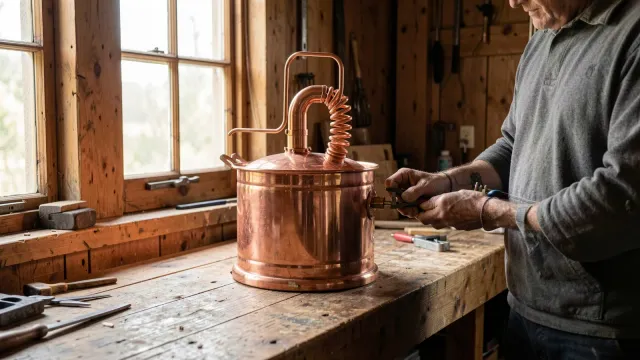
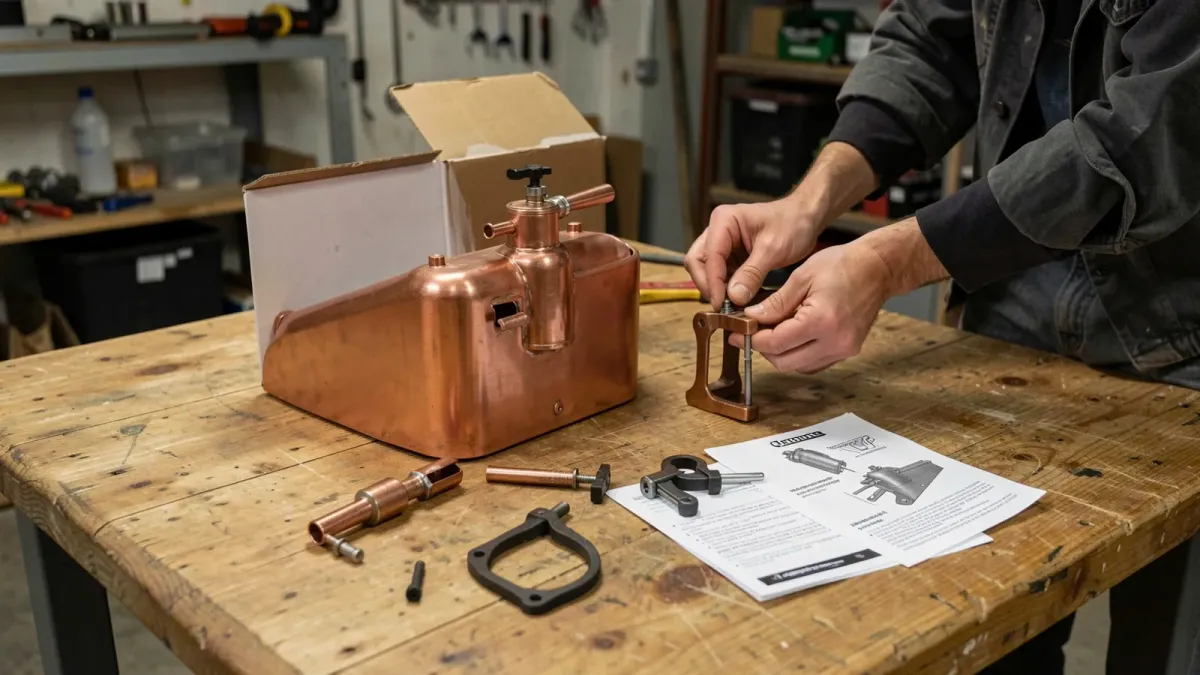
Listings use a mix of phrases: diy moonshine still, electric moonshine still kit, "essential oil distiller," "water distiller," or a copper pot with a coil in a box. Some include a boiler, a condenser, and a stand. Some are sold as decorative or replica pieces. Some are sold with a wink and a recipe book in the photos, then a small line of text that says "for legal uses only."
None of those labels answers the only first question that matters: what do you intend to do with it, and is that use lawful where you live, under both federal and state law?
| How the kit is sold | What that claim may mean | What it does not mean |
|---|---|---|
| "Moonshine still kit" or "diy moonshine still" | The seller is using a search phrase people type | That home production of beverage spirits is allowed |
| "Electric moonshine still kit" | The unit may be sold with a heating element | That electricity makes the activity legal |
| "For essential oils or water only" | The seller is pointing at a non-beverage use | That you can later use the same device at home for liquor |
| "For legal uses only" | A disclaimer, often in small type | A permit, a registration, or a personal-use exemption |
| Antique or replica still | A decorative or collectible object, sometimes no longer usable | That an old still is exempt from rules if you put it back into production |
You will see shop and marketplace names on these listings. Treat the brand as a label, not as legal advice. A polished product page is not a TTB ruling.
The federal line, in plain language
Federal law strictly prohibits individuals from producing distilled spirits at home. The personal-use rules that exist for wine and beer do not extend to spirits. Producing distilled spirits anywhere other than a TTB-qualified distilled spirits plant can lead to federal charges. A distilled spirits plant may not be located in a residence, or in sheds, yards, or enclosures connected to a residence.
TTB's home distilling page also lists possession of an unregistered still among the offenses under 26 U.S.C. 5601, along with engaging in business as a distiller without the required registration, distilling on a prohibited premises, and unlawful production of distilled spirits. Offenses under that section are felonies, and the bureau states that they are punishable by up to 5 years in prison, a fine of up to $10,000, or both, for each offense. Other provisions cover forfeiture of stills, property, and, in some cases, interest in the land involved. This is the official picture, not a rumor from a forum.
Spirits may be produced for certain nonbeverage fuel uses only after you file an application, receive TTB approval, and follow construction, use, record, and report requirements. That path is still not "a still in the garage because I wanted whiskey." The official explanation is on TTB's Home Distilling page, with a shorter summary in the bureau's Alcohol FAQs.
State and local law can add their own rules. A kit shipped to your door does not repeal them.
A buyer's checklist that puts legality first
If you are looking at a moonshine still kit, use this list before you pay. If you cannot tick the legal lines, do not buy the kit for a beverage project.
- You have read the current federal rule: there is no personal-use exemption for producing distilled spirits at home
- You are not buying the kit in order to make beverage alcohol in a house, apartment, shed, or yard connected to a residence
- You understand that a product disclaimer is not a permit, a registration, or a defense
- You have checked state and local law, not only a seller's "legal uses" sentence
- If the intended use is fuel alcohol, you are looking at TTB's application and approval process, not a weekend project
- If the intended use is a lawful non-alcohol purpose allowed where you live, you have confirmed that purpose in current official rules, not in a marketplace title
- If you are looking at an antique, you are buying it as an object, not as a plan to restart production
- You have not been persuaded by a video, a forum thread, or a "everyone does it" story
- If what you actually wanted was homemade wine or beer, you are shopping for those legal household crafts instead
The last line is the one many people need. If you wanted a fermentation hobby, wine and beer already have a lawful household path, with their own caps and a ban on sales. That path is not improved by adding a still.
Honest mistakes that get expensive
A frequent honest mistake is assuming the wine and beer exemption is a general "home alcohol" exemption. It is not. Another is assuming that a kit sold openly must be legal to use for liquor, because "they would not be allowed to sell it otherwise." Sellers can list equipment. Your use, and in some cases possession for an unlawful purpose, is a different question.
A third mistake is treating fuel-alcohol paperwork as a convenient cover story for beverage production. Approved fuel production has its own requirements, and a residence is still the wrong kind of premises for a distilled spirits plant. Do not invent a paperwork story. If you are not prepared to follow an official, approved path, you are not prepared to buy the kit.
If your interest is the history of moonshine, or the look of a copper pot, buy a book, visit a licensed distillery, or collect an object you will not put into production. Curiosity is cheap. An unregistered still in a dwelling, used to make liquor, is not a curiosity the law smiles on.
Questions people ask when they see a still kit for sale
Does buying a moonshine still kit make home distilling legal if I never sell a bottle?
No. The federal prohibition is not limited to people who sell the product. There is no personal-use exemption for producing distilled spirits at home, and a distilled spirits plant cannot be located in a residence.
What if the listing says the kit is only for essential oils or water?
The listing does not decide the law. If you buy a device and then use it to produce beverage spirits at home, the product title will not be the official issue. Confirm any non-alcohol use against current official rules, and do not treat a marketplace category as a permit.
Is an electric moonshine still kit treated differently from a pot you heat on a burner?
The heating method is not what makes the activity lawful or unlawful. Federal law is concerned with producing distilled spirits other than at a qualified plant, with unregistered stills, and with prohibited premises, among other offenses. Electricity is not a legal category.
If I only want a fermentation hobby, what should I buy instead?
A wine kit or a beer setup, if household production of wine or beer is allowed under federal, state, and local rules that apply to you. Those crafts have a limited personal or family use exemption at the federal level, with gallon caps, and the wine or beer may not be sold. They are not a first step toward a still.